
Mini course · Foundation level
Hand Hygiene Compliance Auditing
Collect hand hygiene data that is accurate, consistent and actually drives improvement.
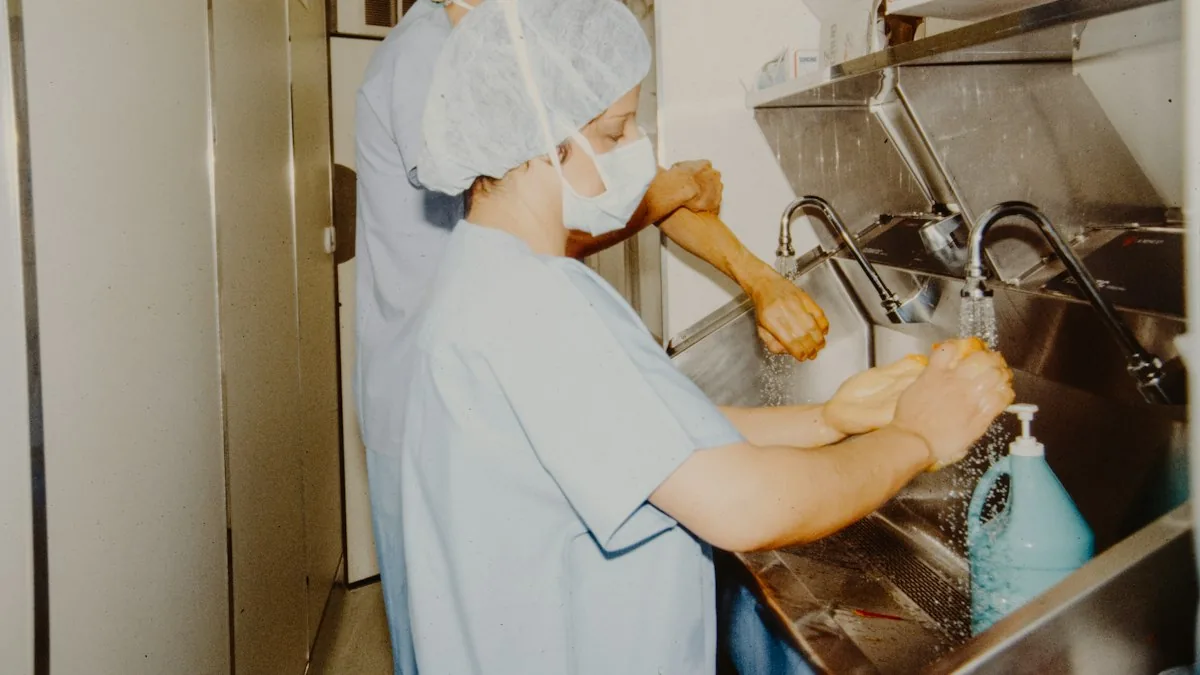
What is Hand Hygiene Compliance Auditing?
Hand hygiene is one of the most effective ways to prevent healthcare-associated infections, and monitoring compliance is a core infection prevention activity. Poorly conducted audits, however, produce misleading numbers. This course teaches direct observation using the WHO 5 Moments methodology: defining opportunities, observer consistency, sampling, limiting the Hawthorne effect, calculating compliance, giving feedback to staff and using results to drive improvement.
- Duration
- 1 hour
- Lessons
- 4
- Level
- Foundation
- Format
- Online, self-paced
What you'll be able to do
- Identify hand hygiene opportunities using the 5 Moments
- Record observations accurately on a standard audit form
- Calculate compliance rates from observation data
- Recognise sources of bias, including the Hawthorne effect
- Give constructive feedback to observed staff
- Use audit results to plan an improvement action
Who this course is for
Course content
4 lessons · 1 hour total · free preview available
1Why Measure Hand Hygiene
12 minFree preview· Course content
Why Measure Hand Hygiene
The purpose and pitfalls of compliance monitoring.
2Observing the 5 Moments
18 min· Course content
Observing the 5 Moments
Available after you enroll.
3Calculating and Reporting Compliance
15 min· Course content
Calculating and Reporting Compliance
Available after you enroll.
4Feedback and Improvement
15 min· Course content
Feedback and Improvement
Available after you enroll.
Earn a credential employers can check
Every AIHCM credential has a unique ID that anyone can verify online in seconds.
Issued: on completion
How it works
- Finish all 4 lessons at your own pace.
- Get your digital credential with a unique ID.
- Share it — employers can verify it at aihcm.us.
Questions people ask
Is the method based on WHO guidance?
Yes. It follows the WHO 5 Moments observation approach.
How many observations do I need?
The course gives practical sampling guidance for reliable unit-level results.
What is the Hawthorne effect?
People change their behaviour when they know they are being observed, which can inflate compliance figures.
Are other monitoring methods covered?
Yes, briefly, including product-use measurement as a complement to observation.