Mini course · Advanced level
Designing OSCEs & Skills Assessments
Design fair, reliable practical assessments that measure what clinicians can actually do.
What is Designing OSCEs & Skills Assessments?
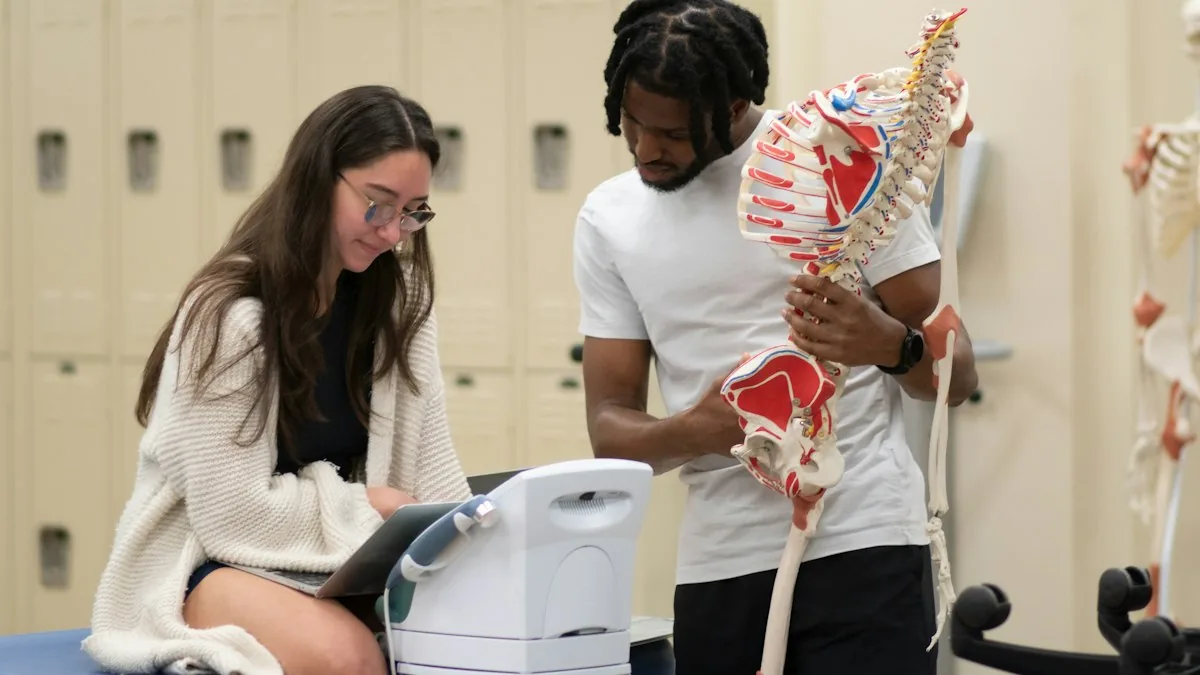
Objective Structured Clinical Examinations (OSCEs) assess clinical and communication skills through a series of timed, standardised stations. Their fairness depends on careful design. This course covers blueprinting, writing station scenarios and candidate instructions, checklists versus global rating scales, standardised and simulated patients, examiner training, standard setting methods, logistics and quality assurance after the exam.
- Duration
- 2 hours
- Lessons
- 5
- Level
- Advanced
- Format
- Online, self-paced
What you'll be able to do
- Blueprint an OSCE against curriculum outcomes
- Write a station scenario with clear candidate and examiner instructions
- Choose between checklists and global rating scales
- Brief standardised patients and train examiners
- Apply a standard-setting method to set a pass mark
- Review OSCE results to improve reliability
Who this course is for
Course content
5 lessons · 2 hours total · free preview available
1What Makes an OSCE Fair
20 minFree preview· Course content
What Makes an OSCE Fair
Validity, reliability and feasibility.
2Blueprinting and Station Design
26 min· Course content
Blueprinting and Station Design
Available after you enroll.
3Marking Tools
24 min· Course content
Marking Tools
Available after you enroll.
4Running the Exam
24 min· Course content
Running the Exam
Available after you enroll.
5Standard Setting and Quality
26 min· Course content
Standard Setting and Quality
Available after you enroll.
Earn a credential employers can check
Every AIHCM credential has a unique ID that anyone can verify online in seconds.
Issued: on completion
How it works
- Finish all 5 lessons at your own pace.
- Get your digital credential with a unique ID.
- Share it — employers can verify it at aihcm.us.
Questions people ask
Which standard-setting methods are covered?
Common methods such as borderline regression and modified Angoff, explained at a practical level.
Do I need statistics?
Basic concepts only, which are explained.
Is it useful for small training centers?
Yes. The course includes scaled-down approaches.
Does it cover virtual OSCEs?
Yes, briefly.