
Not all accreditation is created equal, and one of the clearest markers of quality is whether it is evidence-based. The phrase sounds technical, but the idea is simple and important: decisions about quality should rest on real evidence, not reputation, assertion, or paperwork for its own sake. This article explains what evidence-based accreditation means, how it works, and why it produces more trustworthy outcomes.
The core idea
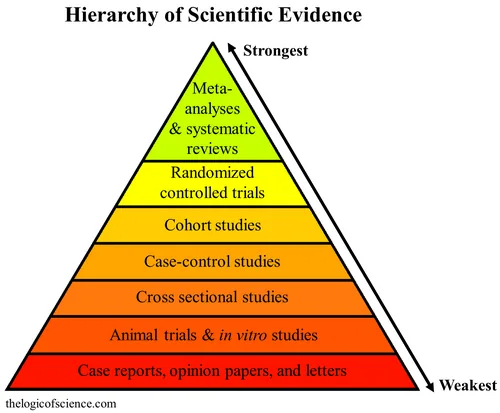
Evidence-based accreditation means that every judgment about whether a provider meets a standard is grounded in verifiable evidence. Rather than accepting a provider’s claim that it has, say, a rigorous assessment process, an evidence-based approach asks to see it — the assessments, the moderation records, the results, the reviews. The burden is on demonstrable proof, not on presentation. This mirrors the evidence-based movement in clinical practice itself, where decisions are grounded in evidence rather than tradition or opinion.
What counts as evidence
Evidence in accreditation is concrete and specific. It includes curriculum documents and maps, faculty qualifications and development records, sample assessments with results, learner feedback, outcome data, governance records, and documented improvement cycles. Good evidence is current, authentic, and directly connected to the standard it supports. A policy document alone is weak evidence; a policy plus proof that it is actually followed is strong evidence. Evidence-based accreditation cares about the second kind.
Why it beats reputation-based judgment
The alternative to evidence is reputation — accrediting a provider because it is well-known, well-connected, or simply says the right things. The problem is that reputation is a lagging and unreliable indicator. Well-regarded organizations can have real weaknesses; lesser-known ones can be excellent. Evidence-based accreditation levels this by judging what a provider actually does, not what it is assumed to do. It is fairer to newcomers and tougher on coasting incumbents — exactly as quality assurance should be.
The role of outcomes
Evidence-based accreditation increasingly emphasizes outcomes: measurable results rather than only inputs and intentions. It asks not just whether a curriculum exists, but whether learners achieve its outcomes; not just whether CME was delivered, but whether it influenced practice. Outcome evidence is harder to gather and harder to fake, which is precisely why it is so valuable. It shifts the question from “did you do the activity?” to “did the activity work?”
How evaluators use evidence
In an evidence-based process, trained evaluators examine documentation and then verify it against reality — through interviews, observation, and inspection of systems. The aim is to confirm that the evidence is genuine and that described practices are actually happening. This verification step guards against the gap between what is written and what is done, which is where weaker accreditation often fails. Findings are then tied back to specific evidence, so decisions are explainable rather than arbitrary.
What it means for providers
For providers, evidence-based accreditation reframes preparation. The task is not to write persuasive prose but to build genuine practices and capture the evidence they naturally produce. Providers who embed good evidence habits — documenting reviews, tracking outcomes, keeping records organized — find accreditation far less stressful, because they are simply showing what they already do. It also means the accreditation, once earned, is meaningful: it reflects reality, so it holds up to scrutiny.
Evidence and verifiable credentials
There is a natural link between evidence-based accreditation and verifiable digital credentials. Both are about replacing “trust me” with “verify it.” Evidence-based accreditation proves that a program met a standard through real evidence; verifiable credentials prove that an individual completed that program through tamper-evident data. Together they build a system where trust is earned and checkable at every level, not assumed.
Frequently asked questions
How is evidence-based accreditation different from a regular review?
A regular review may accept claims and reputation; an evidence-based one requires verifiable proof for every judgment and verifies that documented practice matches reality. The difference is rigor and objectivity.
What if we do good work but haven’t documented it?
Then you have a documentation gap to close before applying. In evidence-based accreditation, undocumented practice is treated as unproven — so start capturing evidence of your existing good work now.
Does evidence-based mean more paperwork?
It means more meaningful evidence, not necessarily more paperwork. The goal is authentic proof of real practice — often captured as a natural byproduct of good operations — rather than documents produced solely for the evaluation.
The takeaway
Evidence-based accreditation judges quality on demonstrable evidence and real outcomes rather than reputation or paperwork. It is fairer, more rigorous, and more trustworthy — and it produces accreditation that actually means something.
AIHCM applies an evidence-based, outcomes-focused approach against internationally recognized standards, and enables accredited providers to issue globally verifiable digital credentials — extending the same principle of verifiable trust from the program all the way to the individual.
Build on internationally recognized accreditation standards.
Explore accreditation