When a professional finishes a CME or CE activity, they get proof — but what kind of proof matters more than it used to. The old default, a paper (or PDF) certificate, is quietly being replaced by verifiable digital badges. This article compares the two honestly across the dimensions that actually matter, so providers and professionals can decide with clear eyes.
The two options, defined
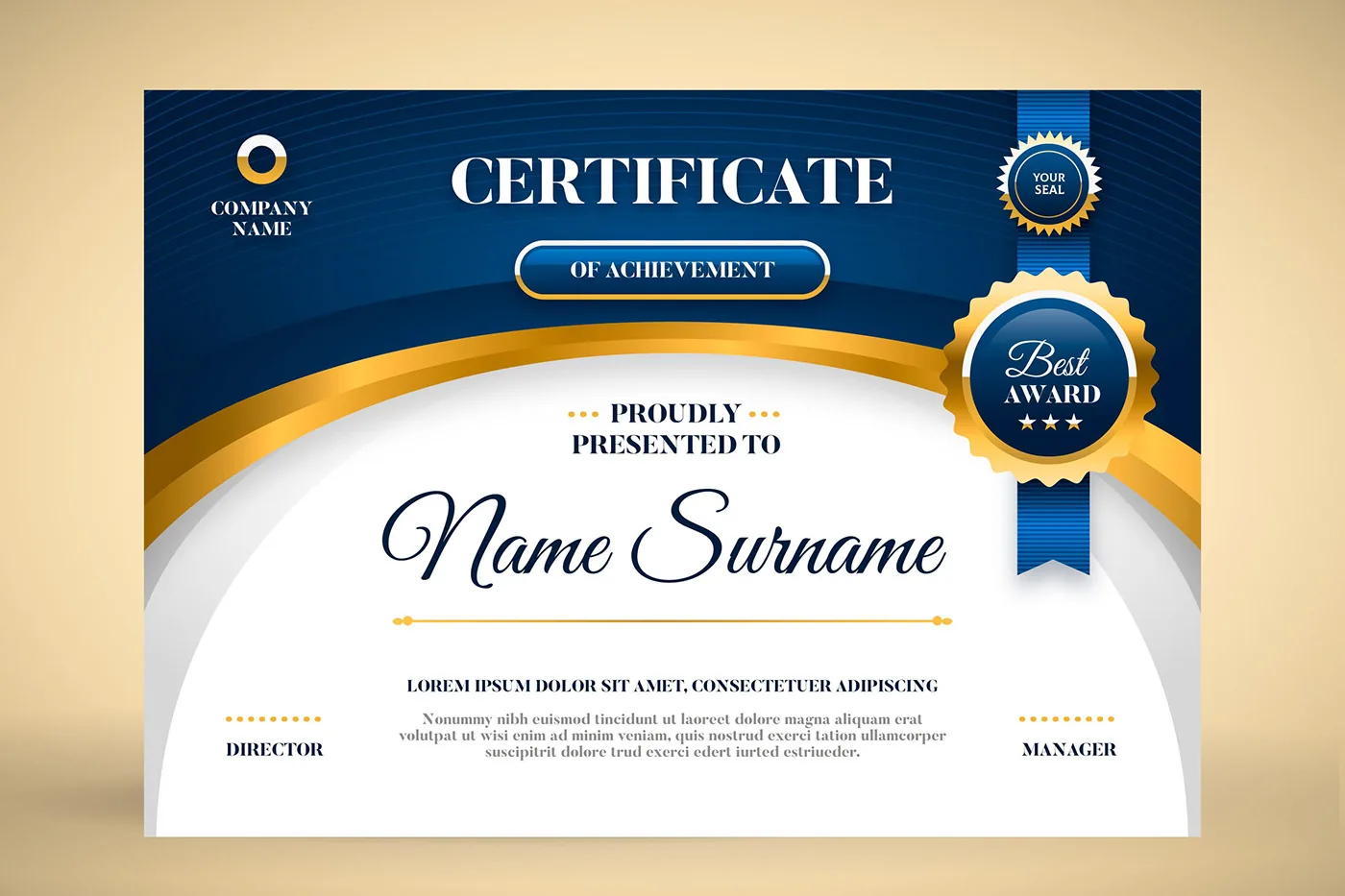
A paper certificate — including its common cousin, the PDF certificate — is a document that displays an achievement. It looks official, but it is fundamentally a static image or file. A digital badge, when properly built as a verifiable credential, is a secure electronic record that not only displays the achievement but proves it: it carries tamper-evident data about who earned it, what it represents, and who issued it, and it can be independently verified.
The distinction is not about which looks nicer. It is about what each can prove.
Security: forgery and tampering
A paper or PDF certificate is remarkably easy to alter. Names can be changed, dates edited, logos copied. Because there is no built-in way to check integrity, a convincing fake can circulate undetected. A verifiable digital badge is designed to resist exactly this — any alteration breaks its cryptographic proof, so tampering is immediately detectable. In a field where a fraudulent credential is a patient-safety issue, this difference is not minor.
Verification: speed and effort
Verifying a paper certificate is slow. Someone has to contact the issuing organization, wait for a response, and trust that the record still exists and matches. Multiply that across every hire or license renewal and the cost is enormous. A digital badge is verified instantly: the verifier checks it directly and sees, in seconds, that it is authentic and what it represents. Verification shifts from a days-long chore to a one-click confirmation.
Portability: does it travel?
Paper certificates get lost, damaged, or left in a drawer; PDFs get buried in inboxes. Neither travels well across a career. A digital badge lives in the professional’s digital wallet or portfolio and can be shared anywhere with a link — to an employer, a licensing body, or a professional profile. For a mobile healthcare workforce, portability is a genuine advantage rather than a nicety.
Data and insight
Paper certificates are informational dead ends — once issued, they tell the provider nothing. Digital badges can give providers useful, privacy-respecting insight into how credentials are shared and verified, and they make record-keeping cleaner and more auditable. For continuous improvement and for demonstrating impact, that data has real value.
Cost and administration
Paper certificates carry hidden costs: printing, postage, reissuing lost copies, and the staff time spent answering verification requests one by one. Digital badges front-load a little setup and then reduce ongoing administration substantially, because issuing and verifying become automated. Over time, the digital route is typically both cheaper and less labor-intensive.
Perception and professionalism
There was a time when paper felt more “official.” That perception has flipped. Increasingly, a verifiable digital credential signals a modern, credible provider, while a plain certificate can look dated — and a PDF that cannot actually be verified can even raise questions. Professionals, especially younger ones, increasingly expect digital, shareable proof of their achievements.
The one caveat that matters most
A digital badge is only as valuable as what stands behind it. A verifiable badge from an unaccredited source is authentic but may mean little; a badge tied to an accredited program inherits the credibility of the standard behind it. So the real upgrade is not simply “paper to digital” — it is “unverifiable certificate to verifiable credential from an accredited provider.” That combination is what makes CME and CE proof genuinely trustworthy.
Frequently asked questions
Are digital badges taken as seriously as paper certificates?
Increasingly, more so. A verifiable digital badge can be authenticated instantly and cannot be forged, while a paper certificate must be trusted at face value. Perception has shifted toward digital being the more credible option.
What happens to a digital badge if the provider’s website goes down?
A well-designed verifiable credential remains verifiable independently of any single web page, because its authenticity is built into the credential itself rather than depending on a live lookup on one site.
Can we offer both during a transition?
Yes. Many providers issue verifiable digital badges as the primary credential while still offering a printable version, easing professionals into the change without losing the security benefits.
The verdict
For nearly every dimension that matters — security, verification speed, portability, data, cost, and perception — verifiable digital badges outperform paper and PDF certificates. Paper’s only remaining advantage, a fading sense of formality, no longer outweighs its very real weaknesses.
AIHCM enables accredited providers to issue secure, globally verifiable digital credentials for their CME and CE activities — combining the trust of accreditation with the speed and security professionals and employers now expect.
Issue and verify tamper-proof digital credentials.
Verify a credential