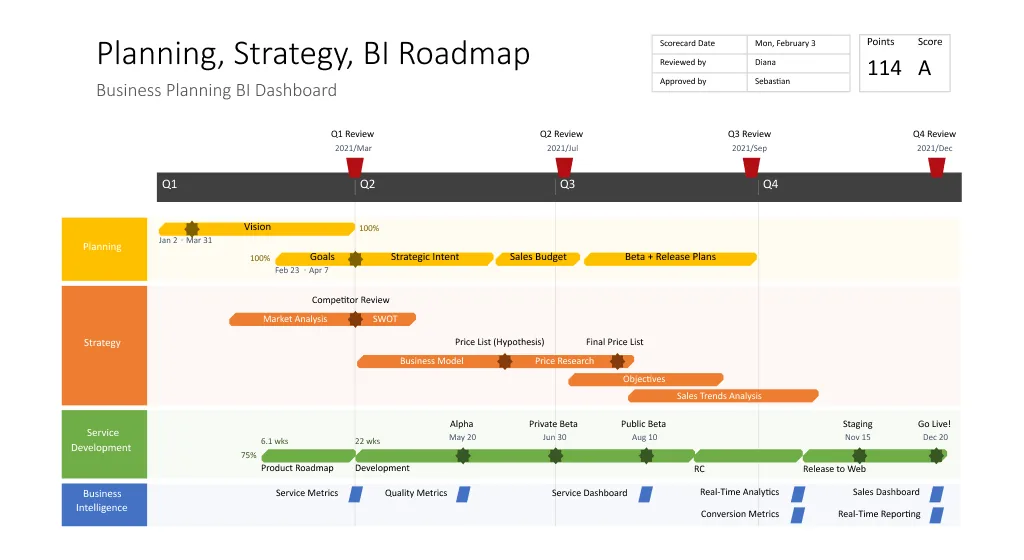
Accreditation can look complicated from the outside, but at its core it follows a clear, repeatable path. If you can see the whole road before you start, the journey becomes a project you can plan and manage rather than a mystery you react to. Here is the process distilled into seven steps.
Step 1: Readiness and eligibility
Start by confirming you are eligible and honestly assessing your readiness. Eligibility covers the basics — legal establishment, a track record of delivering education, functioning governance. Readiness is a deeper question: do you have the systems, evidence, and leadership commitment to meet a real standard? A short readiness review at the outset prevents wasted effort and sets realistic expectations for your team. It also lets you secure leadership buy-in early, which is often the difference between an accreditation project that stays resourced and one that stalls.
Step 2: Understand the standards
Obtain the accreditor’s published standards and study them closely. Translate each standard into a plain-language question about your own organization: Do we do this? Can we prove it? This step converts abstract criteria into a concrete checklist you can act on, and it surfaces early where your strongest and weakest areas lie.
Step 3: Self-study and gap analysis
Now assess yourself against every standard. Rate each as met, partially met, or not met, and document the evidence behind each rating. Where you fall short, name the gap plainly and assign an owner and a deadline to close it. This self-study is the intellectual heart of accreditation — done honestly, it improves your organization regardless of the eventual decision.
Step 4: Close the gaps and build the evidence
With gaps identified, do the work to close them and gather the evidence that proves each standard is met. This might mean formalizing processes, strengthening faculty development, tightening assessment, or documenting practices that were previously informal. Organize your evidence so every claim maps to a source document; a clean, indexed evidence file is a sign of a well-run provider and makes the review smoother.
Step 5: Submit your application
Formally submit your application and self-study report to the accrediting body. Expect a completeness check and possibly clarifying questions. Respond quickly and precisely — this stage is a dialogue, and responsiveness signals the very qualities the standard rewards.
Step 6: The evaluation visit
Trained evaluators verify that your documentation reflects reality, through an on-site or virtual review. They may interview leaders, faculty, and learners, observe delivery, and inspect systems. The best preparation is authenticity: ensure what you wrote is true and that your team can speak to their work naturally. After the visit, evaluators issue findings, which may include required actions — address these with clear, evidenced responses.
Step 7: Decision and continuous improvement
An independent panel makes the final decision to grant, defer, or decline accreditation. Because accreditation is time-limited, the process does not end at “yes.” From there you maintain your evidence, monitor outcomes, and treat improvement as continuous — so that reaccreditation is a natural continuation rather than a scramble.
A realistic sense of pace
How long does all this take? It depends almost entirely on how far your current practice sits from the standard. A well-run provider with organized evidence can move quickly; one with significant gaps needs time to close them properly. Rather than chasing a fast decision, aim for a genuine one — accreditation that reflects real quality is worth more than a rushed stamp. The providers who try to shortcut the middle steps almost always spend that “saved” time later, resolving findings that a thorough gap analysis would have caught.
Frequently asked questions
Which step takes the longest?
Usually step 4 — closing gaps and building evidence — because it involves real change, not just documentation. This is also the step where the most genuine improvement happens.
Can we do the self-study ourselves?
Yes, and you should. The self-study is most valuable when your own team does it honestly, because they know where the informal practices and weak spots are. External support can help structure it, but the reflection must be yours.
What happens if we’re deferred rather than approved?
A deferral is not a rejection — it means specific things need to be addressed first. Treat the findings as a clear to-do list, resolve them with evidence, and you can move forward.
Turning the roadmap into results
Each step in this roadmap builds on the last, and together they produce something more valuable than a certificate: an organization that knows itself, has fixed its weak points, and can prove its quality. Many providers then extend that value by issuing verifiable digital credentials to their graduates, carrying the trust of accreditation all the way to the individual professional.
AIHCM walks providers through every step of this roadmap against internationally recognized standards, and helps accredited organizations issue globally verifiable digital credentials. A focused gap analysis is the ideal place to begin.
Start your AIHCM accreditation journey today.
Explore accreditation